How to create and define a product vision in 4 steps
A step-by-step approach to defining a clear, inspiring product vision
Last updated: November 2024
Learn what product vision really means, why it matters, and how to craft a strong vision statement using practical steps that align teams and guide long-term decisions. |
You cannot build anything great without knowing why you are building it. Your product vision is the starting point. Vision helps you create a forward-looking, customer-driven product strategy that keeps the future in focus and inspires the team to do their best work every day.
There is no shortcut to crafting your product's vision (AI is not going to do the critical thinking for you), but there are set steps you can follow. Use this guide to gain a solid understanding of what product vision is (and what it is not), along with tangible advice on how to draft a strong product vision statement.
Skip ahead using these links:
What is product vision?
Product vision defines the overarching purpose of a product, outlining what it aims to achieve for users and how it supports their needs. It captures where the product is headed and why it matters. A strong product vision aligns your product roadmap with business goals, guiding decision-making and ensuring the team stays focused on long-term success.
Let's look at a few examples for fictitious software companies called HealthTrack, LearnFlow, and FinanceWise. These example vision statements communicate each of their product's purpose and direction at a glance:
HealthTrack: We empower users to improve their well-being through personalized, data-driven health tracking.
LearnFlow: We make learning joyful so students can unlock their full potential.
FinanceWise: We make managing money simple so everyone can take control of their financial futures.
Vision might seem abstract at first, but it becomes the anchor that helps clarify your priorities. When everyone on the team can connect their work to a larger meaning, it drives alignment and fosters a deeper sense of commitment.
A strong vision also benefits your customers. When you are clear on what you are offering and why, you can deliver experiences that truly meet their needs.
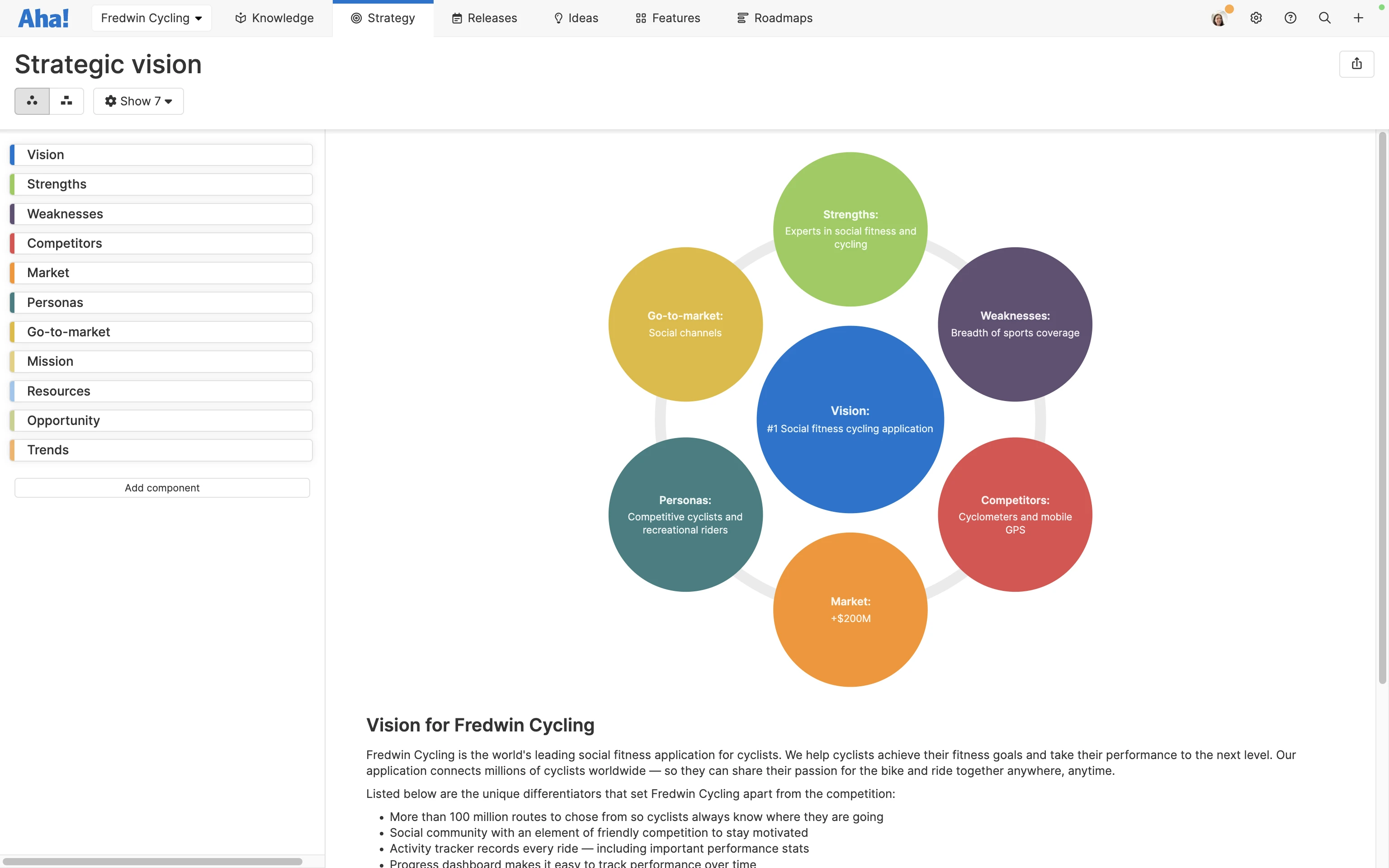
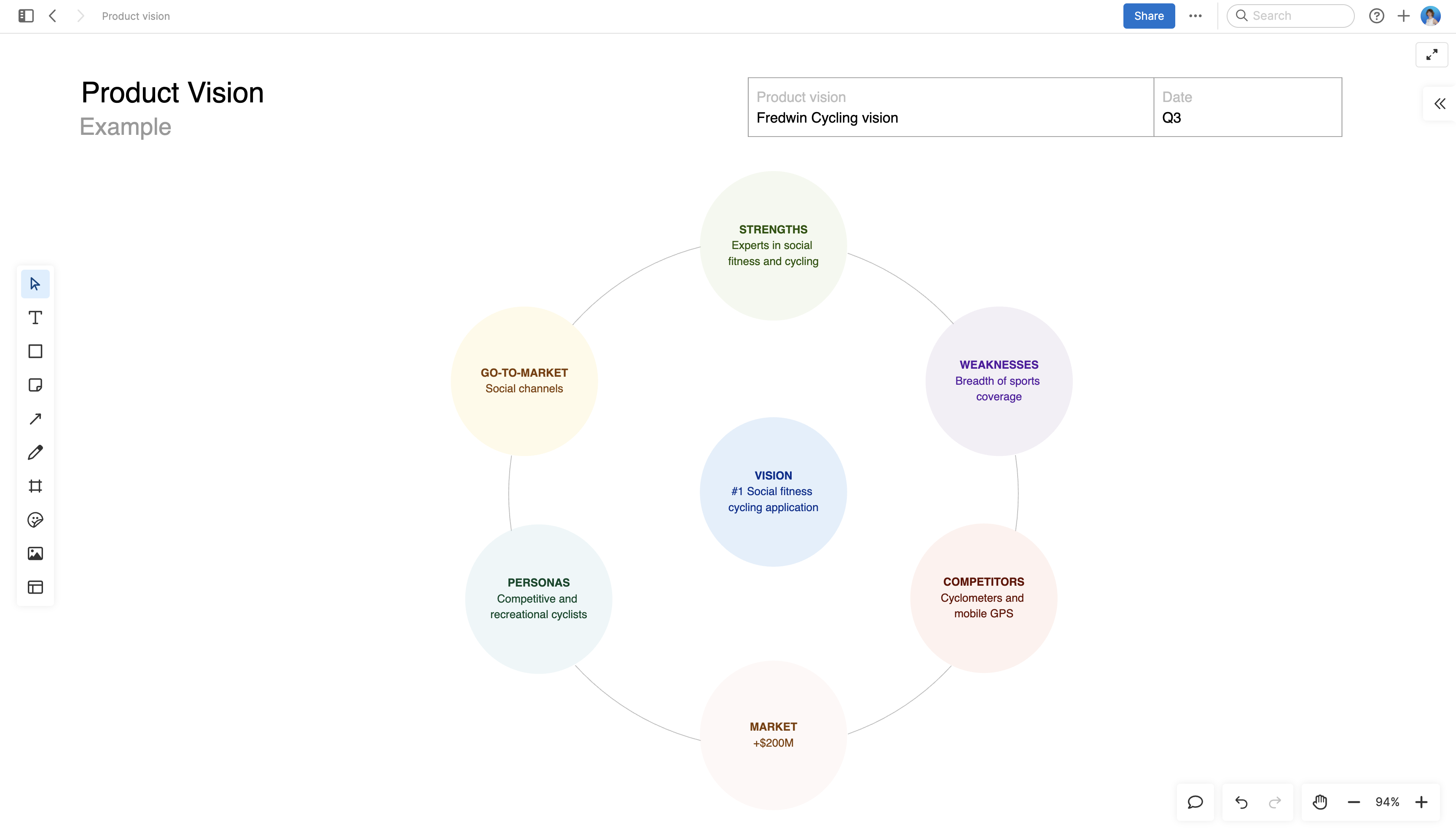
Use strategic models in Aha! Roadmaps to build your vision statement. Start a free trial.
Additional components in this strategic model include competitors, market size, personas, and more.
What product vision is not
Terms like vision, objectives, and roadmap are often mixed up in product management, but getting them right is important. Each serves a different purpose for guiding the team.
A product vision is not the same as a:
Product roadmap: A roadmap is a visual plan outlining the specific features, releases, and timelines needed to deliver on the vision.
Set of product goals: Goals provide measurable outcomes that contribute to the vision but are not the vision itself.
Short-term objective: Vision is focused on the long-term impact, not immediate deliverables.
Marketing slogan: While a vision should inspire, it is not a tagline or brand message — it is a guiding force for the team’s work.
People also often confuse vision with mission and strategy. While the vision defines what you ultimately aspire to achieve, the mission and strategy provide the means to get there. Here’s a breakdown of each term:
Product vision: Defines the purpose and future direction of a product. (In contrast, a company vision describes the entire organization's broader aspiration and impact it aims to create in the world, guiding all products and initiatives under this umbrella. In some cases, product vision and company vision are the same.) Our vision at Aha! is a world of lovable software built by happy teams.
Mission: Defines what you will build or do to achieve your vision, translating it into practical terms that guide strategy and set success criteria
Strategy: The operational plan that includes measurable goals, high-level initiatives, and other work items essential for achieving your vision and mission
Related:
What makes a product vision exceptional?
You know an exceptional product vision statement when you see one. It sparks excitement and a sense of purpose. It inspires people to push boundaries.
While your vision will be unique to your product and organization, there are some common threads that the strongest vision statements share.
They are often:
Intentional: Guiding the team toward meaningful contributions that shape the future
Inspiring: Energizing the team to push limits
Realistic: Setting an ambitious yet achievable target
Customer-centered: Oriented around customer needs
Clear: Simple and easy to communicate
Accessible: Embedded in daily work, consistently reinforced and shared
Your vision should feel bold and direct — written in plain language. Everyone in the company (or product team if the organization has a broad product portfolio) needs to know and understand it deeply. No matter their role, each person should be able to connect their work back to the vision (and product strategy). This is one of the best ways to bring greater impact to daily tasks.
How do product managers contribute to the product vision?
If you are here because you have the chance to write or contribute to a product vision statement, congrats — that is a big deal! Not every product manager gets that opportunity. Often, you will step into a company where the vision is already set, but that does not mean your role is any less important. Whether you are shaping the vision or helping to refine an existing one, your input matters.
Even if you are not defining the product vision from scratch, as a product manager, you play a critical role in bringing it to life. Your close collaboration with stakeholders and deep understanding of customer needs make you an essential part of guiding its direction. While executives may chart the broad destination, you help refine and pressure-test it, ensuring it resonates with your team and aligns with what customers truly want.
Related:
How to write a product vision statement in 4 steps
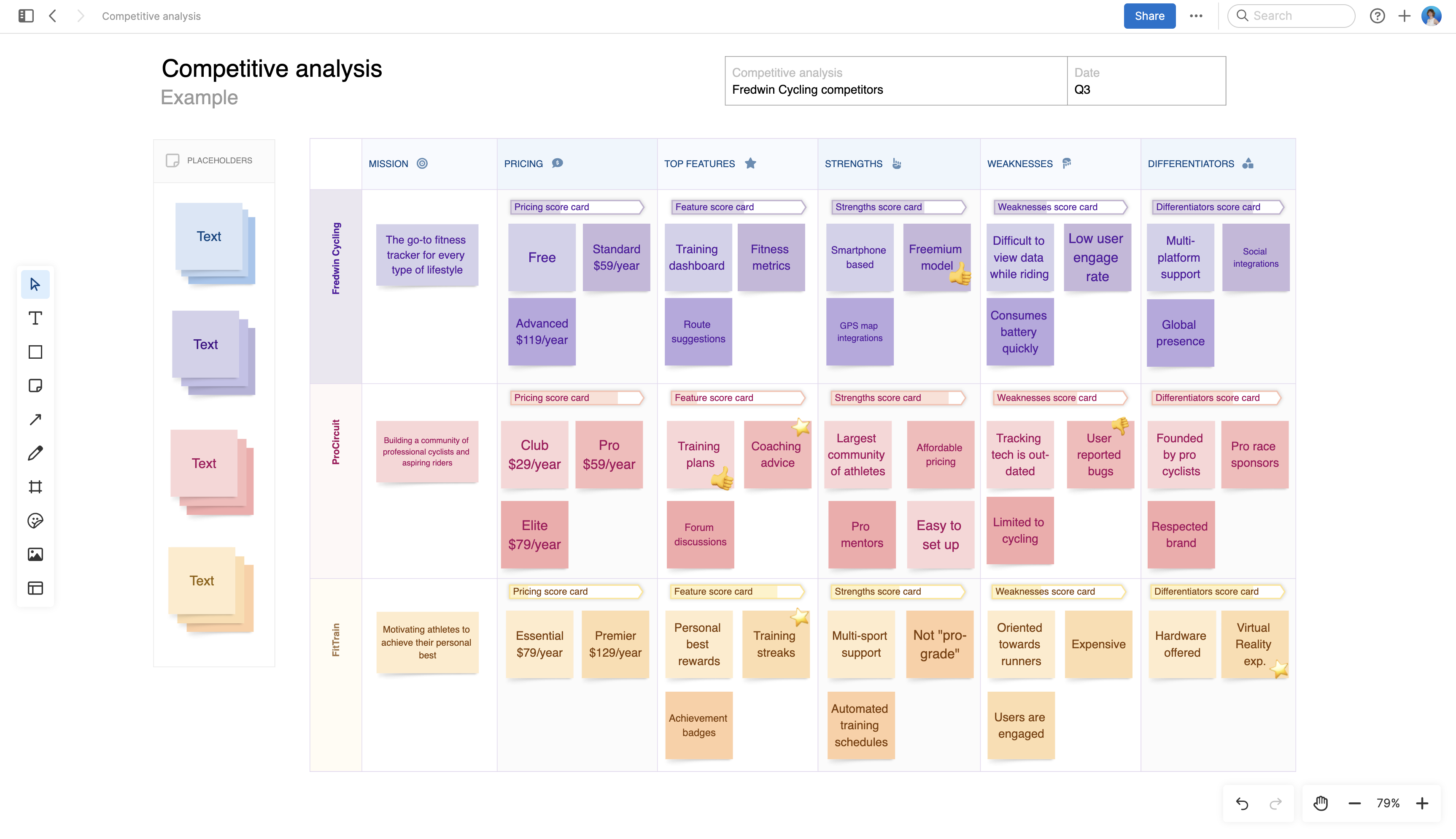
Use this competitive analysis template to understand the broader market.
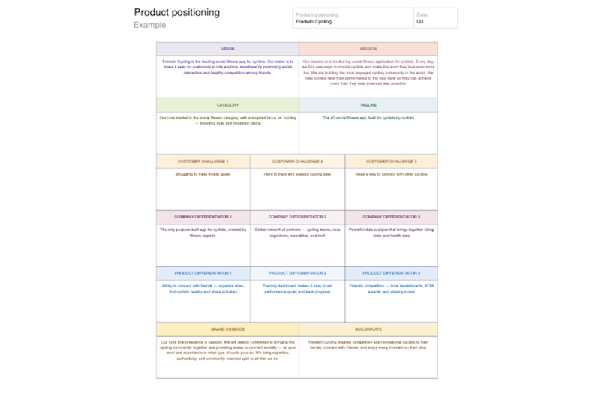
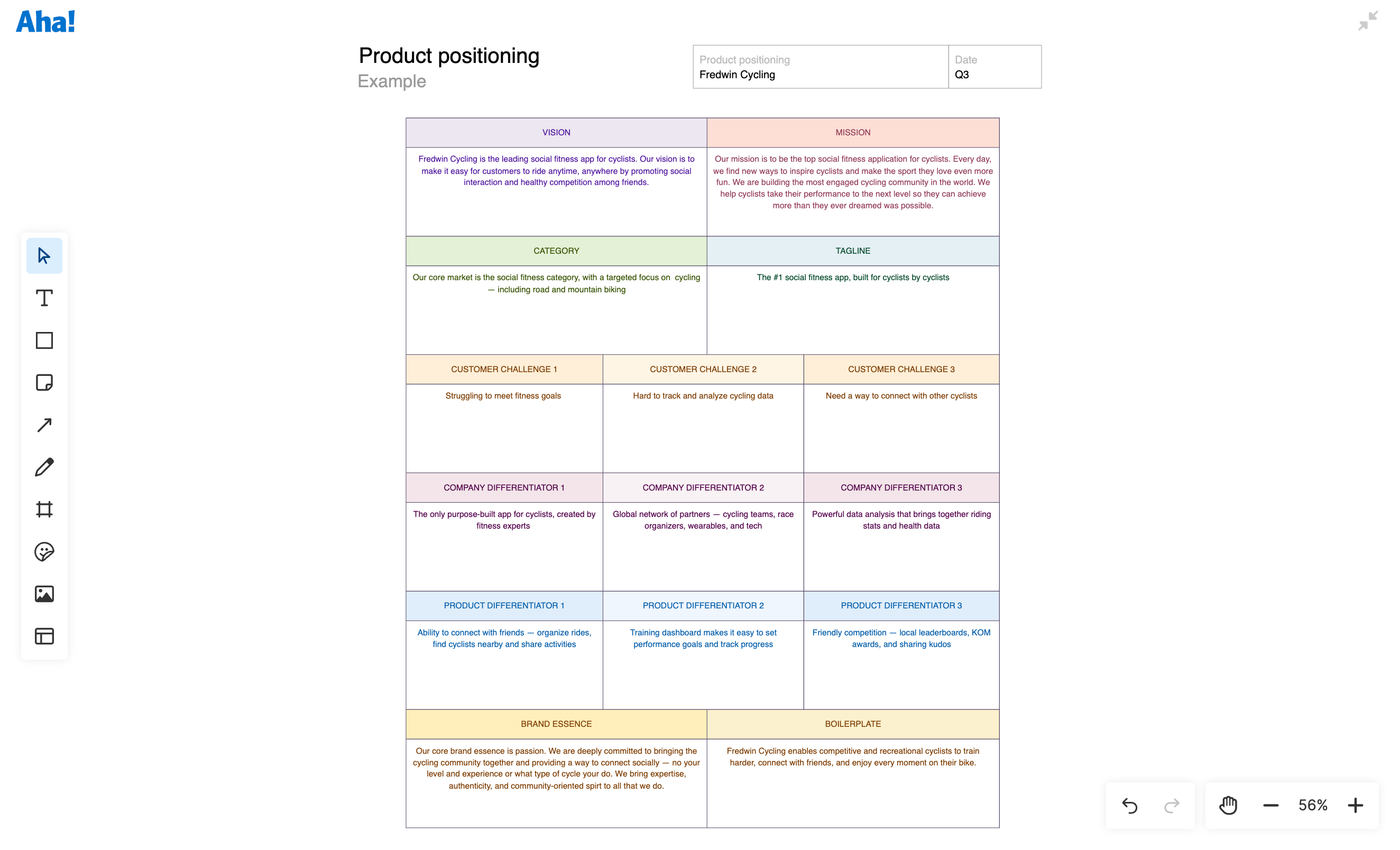
Use this positioning template to articulate the key benefits of your product.
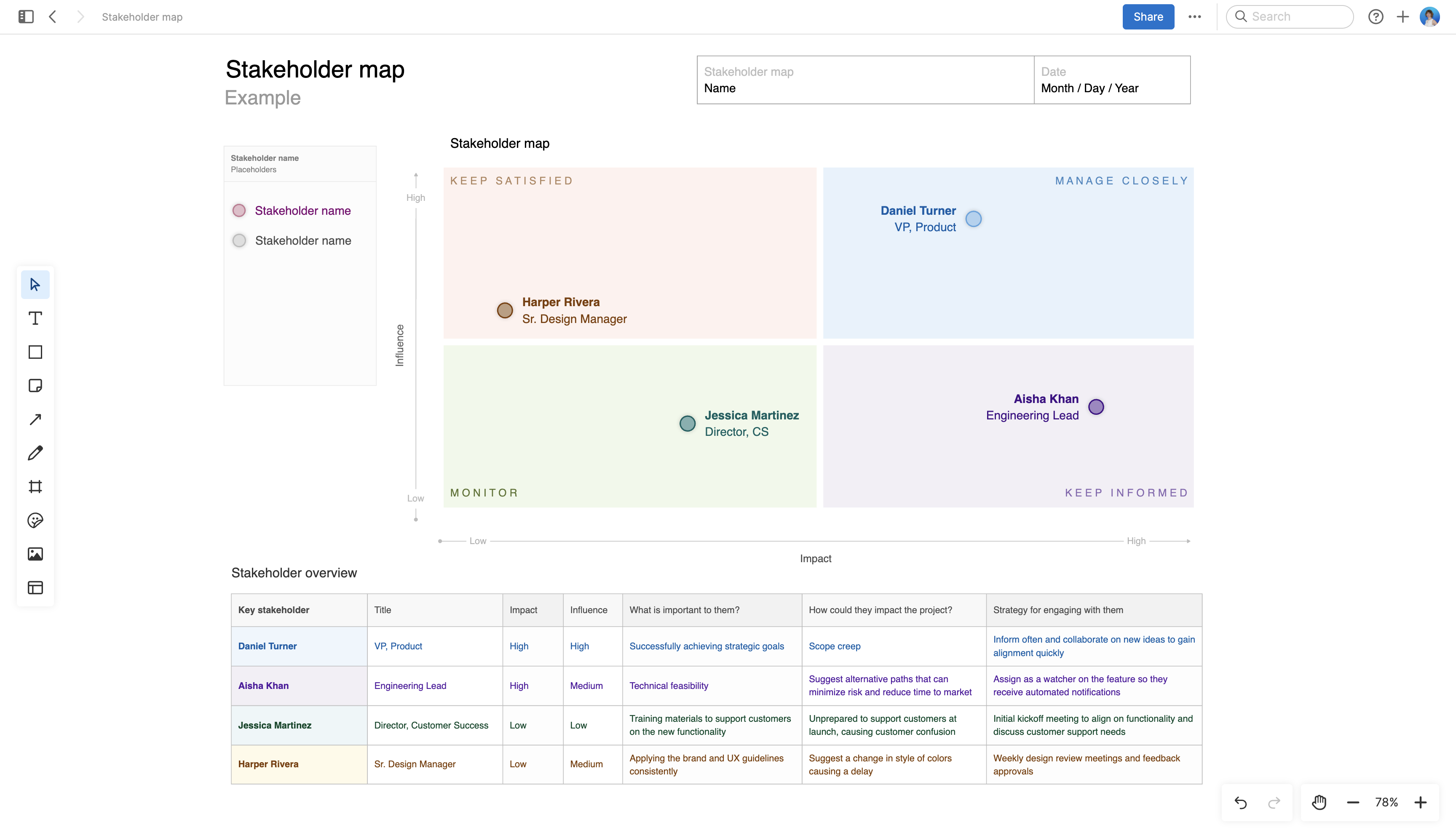
A stakeholder map can help you identify who to involve in product decisions and when.