What are product metrics (and which ones should you track)?
Last updated: May 2024
How do you gauge the success of your product? Maybe you look at user count, revenue generated, or customer feedback received. (Hopefully, it is some combination of this and more.) These specific data points, or product metrics, help you assess the performance and success of your offering.
For product managers, product metrics provide measurable insights into what you are building and how you can improve it over time. For example, you might be assessing customer engagement with newly released functionality or looking at data to understand when website visitors sign up for a trial account. Quantitative product metrics provide proof points that inform your analysis — ultimately helping determine the level of value you are delivering.
Build products like you always wanted — start a free trial of Aha! software.
Product metrics are often grouped into four categories — business metrics, product usage metrics, customer satisfaction, and roadmap progress. (We will dig more deeply into these later.) And within these categories, there are literally hundreds of different metrics you could track.
Understandably, it is easy to become overwhelmed — which should you measure and why? Be purposeful. First, gain an understanding of the different types of product metrics and determine what matters most to your team and the business. Then, you can get started with a core set of metrics and refine or build on them over time.
Let's explore why product metrics matter and which ones are most commonly used in product management today. Jump ahead using the links below.
Why should product managers track product metrics?
As a product manager, you provide the expertise needed to make strategic decisions throughout the product lifecycle — product development, launch, growth, maturity, and decline. Tracking product metrics helps you make critical decisions informed by data at every stage.
You also use product metrics to enhance customer understanding on a large scale. By measuring things like engagement and retention, you can prioritize features that resonate most with your users. Without strong reference points like these, you are relying on educated guesses and gut feelings. Both are risky (and ultimately avoidable).
Metrics can also inform how you define and refine product goals and initiatives. You can often do this by identifying specific metrics that align with your desired outcomes. For example, a goal to accelerate user onboarding and increase your activation rate by 20 percent is meaningful because the desired outcome is tied to a metric. Connecting goals to measurable results allows you to track progress objectively, identify challenges early, and celebrate team achievements.
Related:
7 ways the Aha! team uses reports to show product development progress
McKinsey's take on what it means to be data-driven
In addition to quantitative product metrics, do not forget to also gather qualitative feedback — from an ideas portal, support tickets, customer calls, or targeted empathy sessions. Both quantitative and qualitative data help you gain a clearer understanding of the Complete Product Experience (CPE), so you can think more broadly about what you are creating and how to make it better.
Read more: How to make data-driven product decisions
What is the difference between product metrics and product analytics?
On paper, metrics and analytics sound like the same thing. But technically, they are different:
Metrics are the specific data points that inform your analysis
Analytics refers to the information you can glean from data
Product analytics is the process of analyzing how users engage with your product. A big part of the analysis involves collecting the right data — that is where product metrics come in. The data you secure by tracking product metrics feeds into your analysis and helps uncover insights that inform your product decisions.
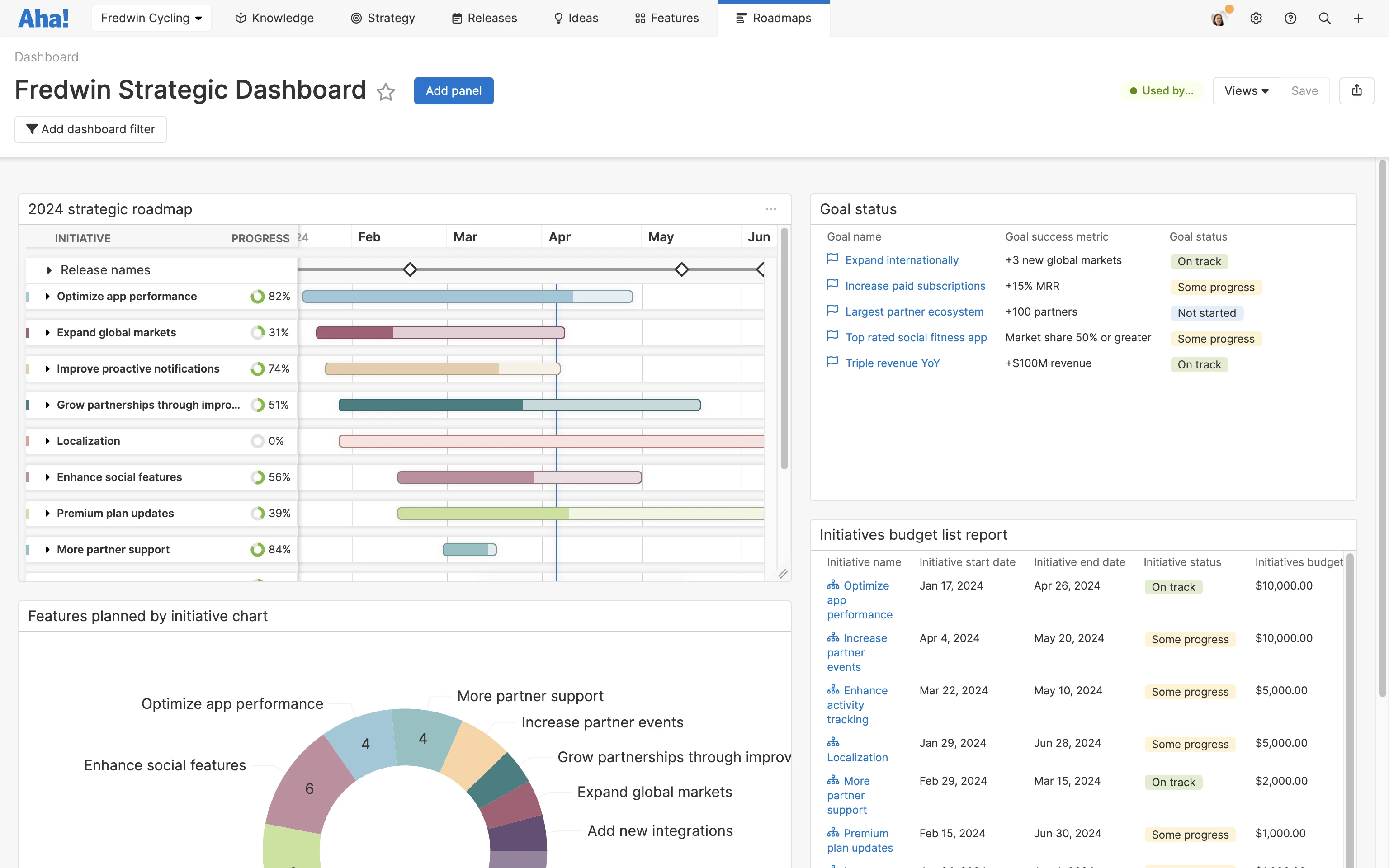
Of course, analyzing thousands of data points manually would be incredibly daunting. This is why many product teams invest in a product analytics tool to collect, understand, and visualize product data in one place. With Aha! Roadmaps, you can report on nearly every data element in your account, then tailor your dashboard to include the exact information you need. For example, take a look at the product performance dashboard below — focused on progress made towards strategic goals.